Blah, Blah, Blah….


I haven’t written in a while, and it’s taken me a while to realize that I’ve been quite blah. I thought I handled all this so well, like a trouper, like a true Viking descendent, like wonder woman, but more so, I’m handling this like a human.

img_1439

Now that I am at the one year anniversary of this journey, and I vigorously count my blessings, I notice that I’m “waiting for the other shoe to drop,” I’m more than bothered by the news on TV, and excessively worried about anything that could possibly go wrong, most of all another PET scan, which I have been dreading for a while.

A PET scan gives my physicians a clear view of any new cancer activity. The thought gives me chills, and left me nauseated with fear the day before my scan, which was only days ago.

Preparation for a PET scan involves spending the day before the test as leisurely as possible, since muscle activity can light up on the study, giving a false positive. I was told to drink a lot of water, but not to have anything to eat or drink after midnight.

Once there, an IV is inserted, before the technician is called. She arrives with an ominous looking metal box containing a syringe of a radioactive material which she injects into my vein, while we chat, as if there is nothing at all strange about this.

I have no reaction to the substance, and I read for the hour it takes for it to circulate through my body. I try not to think about that, assured that its half life is only ninety minutes, so I will soon be rid of it.

The scanner is in a room that is quite cold, so I’m bundled up with blankets, and quite comfortably bolstered with a leg rest and a pillow, before the study starts. There is nothing uncomfortable about the exam, no claustrophobic tunnels, no knocking noises, not even a computerized voice filling the room. The only instruction I am given is not to move, and I do not move, for if movement prolongs this experience, I will be the most unmoving patient of the day.

Results: Waiting for the results, is far more stressful than the actual scan. When I am told the test is negative, the relief is phenomenal, and I am grateful.

Coming Soon: I will venture back to the chemo days, with more tips on how to brave through it, and then talk about radiation.


What does it feel like to get chemo?

After the IVs were removed and the Neulasta self-injecting device was taped to my body, I was given prescriptions for nausea, and some excellent advice about remedies that would hopefully preserve my nails during chemotherapy. With all the frightful scripts playing in my head, nail damage was something I hadn’t considered.

On the way home, Carmen and I stopped at the drugstore to fill the prescription and buy some of the remedies the nurses recommended, which I will mention in a later post. I felt fine, a little tired perhaps, but I think it was more emotional fatigue that I felt that first day, than anything else.

Although my dogs are always welcoming, I wondered if they would take note of the the toxins I had been subjected to, as if I reeked of poisons….., but of course, neither of them did.

The first evening I was quite fine, and happy to have Carmen and my family there to distract me. Knowing that the chemo would start to take its effect, I remember being frightened before I went to sleep that night. I worried that something ominous would happen while I slept, and I fretted about what the morning would be like.

The next day was the beginning of a slow decent into a miserable malaise that truly didn’t subside for five days.

The Neulasta device started to make a clicking sound at the 37th hour, and delivered a little snap when the cannula was inserted under my skin, that felt like the snap of a rubber band, over so fast that it was not an issue. After waiting in stillness for the thirty minutes it took for the device to empty, I peeled it off my skin once the meter read “Empty,” and discarded it as instructed. By then, I was glad I didn’t have to go back to the infusion center for a shot of the medication that this device injected automatically.

I wasn’t hungry at all, but I took the medication for nausea before I had a chance to become nauseated, since it is easier to prevent, than cure, but food started to taste peculiar. For some reason, pears and kiwi fruit were the only foods I wanted, but certain vegetable dishes were tolerable, although most foods started to taste like wet cardboard.

These five days, I slept a lot, but every day I showered, and although someone else walked the dogs, I made an effort to go out side, although some days I didn’t get further than to a patio chair.

Any effort became laborious, and I felt short of breath with very little exertion. As the physical symptoms started to subside by the fourth day, I was still left in a mental fog that lasted another full day, making something as simple as lifting a tea cup an activity to ponder.

What weighed as heavy on my mind as chemo, was being in a situation of needing it. More than ever before, my thoughts drifted to lifestyle choices, and food as medicine…..

Tips: Stock up on easy to prepare foods. Stay hydrated. Tidy up so you have a comfy home to come home to after chemo, and try not to have a huge “to do list” that needs attention during that week. Make an effort to maintain good hygiene, and get some fresh air. Most of all, try not to fret.

Next Entry..coming soon!


Chemo, me?

Chemo Day One

So, it’s chemo day. It feels surreal and frightening. I have an uneasy sense of subjecting myself to something hazardous, for in my native Norway, chemo is literally called “Cell Poison,” and that doesn’t sit well. The alternative is allowing cancer cells to proliferate without opposition. That is not an option.

I declined all offers of support, or of a ride to the infusion center, feeling that more than anything, I have to focus, as if that would help me process this. Having cancer still doesn’t feel real, and I don’t see myself as “a cancer patient.”

After I signed in, I sat down to wait, but as I searched my purse for something I don’t remember now, my gaze drifted to a pair of high healed boots and the wheeled carry-on of a person who suddenly stood infront of me.

Carmen! We have been friends from the first day of medical school…decades ago now, and although she lives on the other side of the country, I was shocked to see her, but not really surprised. She has done utterly amazing things before. Through all the phases of our lives, our friendship has remained a constant and abundant blessing, and a treasure I will always cherish.

Her words to me were: “Do you really think I would let you go through this alone?”

She knew better than to ask if she could come, but now that she was here, I dared to breathe. She asked all the questions I needed to ask, but might not have, and with her there, the fear dialed down a few notches.

I had taken a hefty dose of a steroid as premedication at home, and here, there were a few others, each one administered by IV over a designated period of time.

When the two chemotherapeutic agents were started, Cytoxan and Taxotere, I was nervous, but time drifted by as the toxic substance dripped into my veins, and I realized that I felt nothing. I was given ample documentation about about both drugs, their use, their side effects, and what to expect, but what stuck in my mind is that these drugs would weaken me, they could cause miserable neuropathy, and that my hair would someday soon…. just fall out.

To keep my white blood cells from being destroyed by the chemo, making me more susceptible to infection than I already am, I was given Neulasta. The medication was to be administered automatically in 37 hours, by a small auto injector which was taped to my body, and that I could peel off once the medication was administered.


I was also given medication for nausea, and advised to start taking it before symptoms start, since it is easier to prevent symptoms than to suppress them.

I remember leaving, feeling weary, but generally fine.

Now…what will tomorrow bring as the chemotherapeutic agents get to work?


Things to bring to a chemo session:

Bring food…something that does not have an odor that could offend patients who might not be feeling well. For the same reason, don’t wear perfume or cologne. The type of food I would recommend could simply be crackers, dried fruit, nuts, and a drink in a spill proof container, preferably water.

Not knowing that Carmen would be there, I brought a copy of C.W. Gortner’s wonderful book, “Mademoiselle Chanel,” and a draft of my own novel, “The Apothecary’s Niece,” but with Carmen there, we were deep in conversation, the hours flew, and I didn’t read a thing.

img_0108

Next entry coming soon!

Troubles Before Treatment.

The unexpected…

1.Axillary Web Syndrome: Painful Cording.

unknown-copy

  1. A Seroma: Seriously?

images-copy-2

My wounds healed quickly, leaving only two small scars, one where the tumor had been removed, and one in the axilla where lymph nodes had been resected.

What I wasn’t prepared for was the painless, boggy swelling that formed below the axillary scar, which made putting my arm at my side a constant reminder of the procedure. It was a SEROMA, a harmless fluid filled swelling which can occur after surgical disruption of the tissue, but it took weeks to resolve.

Something more bothersome was the sensation that my arm was tight, making it painful to reach overhead, or behind me. Looking at my arm, I noticed thick band like cords forming under the skin, all the way from my axilla, to the inside of my wrist. Sometimes the pain even shot across my chest, almost up to my collar bone, but this was mainly with extension of my arm.

Dr. Katin referred me to a wonderful lymphedema specialist, although I protested that I had no evidence of LYMPHEDEMA. This is a swelling that can occur due to blockage of lymphatic fluid after surgical disruption of the lymphatic chains. The therapist proved to be a God-send, and relieved the symptoms with just a few sessions of massage and painless low-level laser treatments, and after a while, the cords softened and disappeared.

The formation of this cording, called AXILLARY WEB SYNDROME is associated with a higher risk of developing lymphedema at some point, but I hope and pray that it won’t happen, and hope my yoga practice will discourage it.

To avoid complications of lymphedema, and infections after removal of lymph nodes, I am advised not to have blood draws from veins in the affected arm, nor should this arm be used for an IV. I should be careful to avoid cuts or scrapes that could be a source of infection. Taking my blood pressure in this arm is to be avoided, and my lymphedema therapist tells me not to sling my heavier-than-expected hand bag across my forearm. New things to remember…but not so bad…..

Thoughts of cancer, chemo, radiation, and the journey ahead, continue to twist in my mind and never leave me for long. Friends and family are kind, and offer support, but it’s difficult to see my fear mirrored in their faces, so there are times I just try to forget, take long walks, play a game of mahjong, or lose myself in a wonderful novel.

It will soon be time to start chemo.

http://www.lymphnet.org

http://www.cancercenter.com/lymphedema

Next Entry: Coming soon!


So, What’s Next….?

What’s Next?

Christmas, that’s what came next. It was difficult to focus on the holidays while my wound was still healing, and the sound my diagnosis, sounded as unreal as an alphabet soup spelling words like “recurrent,” “metastasis,” “breast cancer”, and then making it worse by adding “aggressive” to the mix.

What made a difference to me was meeting with an oncologist, and having the results of a pet scan before settling in with family to celebrate Christmas and ring in the New Year. This time survival would be on top of my list of resolutions.

Selecting an oncologist can be difficult, and there is no scientific method for assuring that any one particular doctor will be the best. I chose mine based on reputation for staying up to date, background, years in practice and access. Although the thought of seeing a world renowned specialist in a famous medical center might make me feel that I left no stone unturned, I want my doctor to be here, where I am.

The first time I walked through the door to the oncology center, part of me wanted to revolt and be a two–year-old throwing a tantrum and refusing to participate. It helped to see that a lot of the people in the crowded waiting room looked quite healthy in spite of wigs, creative head wraps and sparse hair growth. The sheer number of people in the office reminded me of how many people go through this, so I’m not alone.

Realizing that my doctor has spent most of his life treating cancer, I wasn’t surprised, nor did I fault him for his “matter of fact” attitude when he sat me down and showed me my test results.

It was worse than I thought. It had just been a tiny nodule on the side of my chest, but apparently it was quite aggressive. I commented on the tumor markers, and he said, “I’ve seen higher levels.”  I was able to breathe when he assured me that the woman with the higher level was alive and well, and years had passed since her treatment.

He told me that the best treatment option would be a combination of chemotherapy and radiation, followed by a hormone suppressive therapy which would decrease my risk for another recurrence to 15%.

My head flooded with thoughts of alternative therapies, cutting edge European treatments and exotic far eastern remedies, all of which I sifted out of my mind. I decided to go to war with cancer using conventional treatment proven to be effective, and then rebuild my general health and continue the battle with mainly a plant based diet, yoga and other health promoting activities.

I would start chemo once the holidays were over and my wounds healed, but I don’t think I would have had a moment’s peace had I not had a PET scan before the holidays.

A PET scan is basically a scan that can detect suspicious lesions anywhere in the body, and without knowing if my cancer had spread beyond my axillary lymph nodes, this machine was a God send, although until I had the results, my anxiety surged.

images-copy


There was preparation involved in having a pet scan. I was advised to limit my activities the day before, so I did nothing. Nothing at all. The day of the pet scan I was given a solution high in sugar which would attach to suspicious areas in my body, if there were any, and light up on the scan. Increased muscular activity could have the same effect, so I didn’t move during the infusion.

The scan lasted for about an hour. The technician told me that she would have to stop and restart the test if the machine detected any movement beyond breathing, so I remained still and found another reason to be grateful for my practice of yoga, which kept me from fidgeting.

Aside from uptake in my axilla due to my recent surgery, the scan was negative. I said a prayer of gratitude, and then tried to turn my attention to family, the holidays and to healing.

Next Entry: September 29th, 2016

Under The Knife…..

Under The Knife…

My first surgical appointment was barely three days after the ultrasound, with its subsequent biopsy and unsettling report. As anxious as I was to find out more about my new diagnosis, I also wanted this malady out of my body, at least the part we knew for sure was there. The thought that there could be more gnawed at me, but first things first.

The surgeon I consulted is exclusively a breast surgeon, and well respected in the medical community.  I had never met him, but he quickly put me at ease by providing a sense of normalcy with his “I’ve got this” manner.  Another report had trickled in labeling the tumor as “somewhat aggressive,” but still he was reassuring, and told me that patients with much worse reports were living productive healthy lives now. It helped, and I left with the sense that my case was something he would tackle with ease.

By another stroke of luck, the surgery was scheduled for the following morning, so I had little time to prepare. Aside from being NPO (nothing by mouth) after midnight, there is technically nothing to prepare other than to show up.

I was there before the surgical center opened, and before the sun rose. Anesthesia is one of my least favorite things, if not a full blown phobia. I think I remember every anesthesiologist that has ever put me under, and I always fretted a bit about what would happen if the anesthesiologist left the room, the machines failed, or someone drew up the wrong medication, etc, etc.

It’s not as if a pre-op area is new to me, but every time I set foot in one, I notice the starkness, the abrasive scents of antiseptics, clatter of machinery, and the rumble of gurneys being pushed through mechanical doors. In spite of HIPPA regulations, I hear more than I want about my fellow patients concerns. Some of what I hear reminds me to be grateful. Still, this is a lonely place to be, because no one else can do this for you.

I am given a plastic bag for my sparse belongings, a dreary hospital gown and hideous socks that have slip proof rubber strips along the soles. A warm blanket soothes my frayed nerves until a cheerful, bright eyed woman appears at my side, introducing herself as my anesthesiologist.

She was great, and had the same reasuring quality my surgeon has. In addition, I took note that she had actually read my medical record, and knew that I had respiratory problems as well as an immune compromise.

The anesthetic drugs she told me she would be using are quite routine, but having a dislike for anything that would put me out, she took the time to talk me through those too. Diprovan or Propofol is the drug brought to media attention because Michael Jackson used it as a sleep remedy, and overdosed, but under the vigilant eye of an anesthesiologist, it is quite safe, and used for many outpatient procedures, even colonoscopies. A benefit is that the patient wakes up alert, and without nausea or any other discomfort.

Versed is a premedication used prior to Diprovan. It is an amnesic as well, so as I watch the anesthesiologist push the plunger of the syringe and the medication seeps into my IV tubing, I remember nothing until the surgeon is standing over me.

“It went well,”he said, “but..”

What? It can’t be over already, but it is, and I remember nothing. But, what did he mean by, “It went well, but…?” What he told me was that the tumor was removed along with five lymphnodes from my axilla. Preliminary testing indcated that three were positive, so there is a metastesis, meaning, the cancer has spread.

So, the plot thickens…… This is a story I don’t want to be in.

To read more about metastatic cancer, go to  Cancer Treatment Centers of America at www.cancercenter.com or the American Cancer Society at www.cancer.org

For surgical Newbies:

What I brought with me to outpatient surgery:

As little as possible! An ID, cell phone, one credit card, something really good to read, coconut water and crackers for later…just in case.

Next Entry: September 26th, 2016


Discovery….

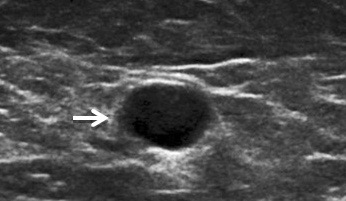
I am lucky to have good friends in the medical profession. Being a physician myself, I knew the drill, although Oncology is not my specialty. Before discussing this tiny lump with my primary physician, thinking it probably wasn’t enough of a cause to create a stir, I ordered an ultrasound myself and asked a radiologist friend to read it for me. Glancing at the screen, and not being a radiologist either, I foolishly assured myself that she would say it was just a cyst, and we would go to lunch and discuss far more interesting topics.

ultrasound4-1

After all, I had been down this road before with intra-ductal carcinoma twenty years ago.

Back then I had a cyst along the side of my breast that was a constant irritation when I wore underwire bras, so I elected to have it removed. After the procedure the surgeon told me it looked like a completely harmless cyst, but when the pathology report came back, it was positive for a malignancy in the ductal tissue surrounding the cyst. Looking back at mammograms, there was no evidence of anything suspicious at all.

After multiple excisional biopsies, I opted for a bilateral mastectomy with reconstruction, which was drastic in those days, although common now, but nothing else seemed right to me. Looking into the green eyes of my four year old child I decided that no cancer was going to stop me from being there for her.

1e885566c786622d1be64e87b93e551d-1

          The firm little nodule I found recently was at the side of my chest between the mid-axillary line, and the edge of my breast implant. There couldn’t be much breast tissue there, but actually breast tissue can extend beyond the breast into the sides, and upwards into the area where a bra strap would lie as well.

Instead of lunch, my friend was able to squeeze me in for a biopsy, which she did in her office. A call to the pathologist a few hours later changed everything.

I didn’t expect to hear: “You’ve got cancer….”

I left her office with a surgical appointment made for the following week, and a head full of wonder. It just didn’t seem real, but it didn’t take long before the skin crawling, organ quaking, bone deep fear set in. Doctor or not, it was horrifying, but mostly because at that point, I didn’t know enough.

More testing needed to be done, but it would take time. I’m not patient by nature, so it was agonizing. Thoughts of torment, death and dying just tortured me. The fear in my loved one’s faces just made it worse. Should I clean my closet, see a lawyer, write my obituary, drink a whole bottle of wine or go to my yoga class and try to get a grip?

I decided to be as pro-active as possible and dove into finding methods of making my already “healthy lifestyle” better, starting with Dr. Michael Greger’s book “How Not To Die,” and became drawn to his website as if it were a life line. My yoga practice became my “safe zone” since the meditative aspect of it allowed me an escape from my tormented thoughts, at least for a while. Friends and family were a huge help because I could talk about it, and I could choose NOT to talk about it…mostly I chose not to talk about it.

www.NutritionFacts.org Dr. Michael Greger, author of “How Not To Die.”

Find it at www.amazon.com

Next Entry: September 22nd, 2016

I’m Not Jessie’s Girl

Jessie’s Girl” has brought a smile to my face for decades, but now the song has a brand new sweetness, because oddly, I credit Rick Springfield for saving my life. I believe he indirectly contributed to the detection of my cancer at a stage where there was still a battle ahead, but where survival was expected. Does he even know it? Probably not, but he will always have my heartfelt gratitude.

blog2blog1

So what is the connection here? I’m a medical doctor, but it took years of recurrent respiratory infections for me, and my own physicians to consider that my frequent bouts of illness were due to anything more than working long hours in a high volume medical center where I was continuously exposed to infectious patients. A few years ago, I wanted to prove to my pulmonologist that my worsening symptoms were not triggered by allergies to my dogs, and during the course of testing, my allergist who also specializes in immunology, took a look at my immune system.

I was shocked to discover that I have one of many Primary Immunodeficiency Syndromes, which explained a lifetime well acquainted with pneumonia, chronic bronchitis, asthma, all which eventually left my lungs permanently affected. A weakened immune system also opens doors to many other maladies, all of which I tried to prevent by taking my treatments diligently, resting, hydrating, maintaining a good diet and exercising to my capacity, avoiding crowds and overexertion, but then there was cancer, the greatest opportunist of them all.

Cancer brings everything to a halt. But, first it has to be discovered. I don’t often go to crowded places, but when Rick Springfield came to town, the temptation of hearing “Jessie’s Girl” from the “still cool” rocker, made me decide to step out with a few friends to see him perform live.

After acting completely out of character and throwing myself into the crowd in front of the stage on a single minded quest for that perfect photo, I was quite happy with the evening.

Days later the familiar symptoms of pneumonia began, and I started treatment that I expected would bring me back to my usual state of health within a week or two. Instead of improving, my symptoms worsened, and every cough, and every deep breath brought on stabbing pains in my left side between my breast and what doctor’s refer to as the Mid-Axillary Line. It alarmed me, because the pains were far worse than usual, and my shortness of breath was disturbing. I thought it a harsh price to pay for an evening of music and good times, but crowds can be germy, and my immune system isn’t up for much of a fight. Still, had I not thrown myself into the exuberant crowd around Rick Springfield, I probably wouldn’t have gotten sick, and had I not become that ill, would I ever have found that menacing lesion?

Bracing myself against the pain, I started to clutch my side with every cough, and it was then my fingers found the firm pea sized nodule that I probably never would have noticed in time. I think my fingers floated over the nodule several times over the course of days before my brain took note of the oddity of a lump where no lump was supposed to be. No, it wasn’t a lumpy rib border or a lymph node. It could be a cyst, and it could be……., yes, it could be cancer.

www.primaryimmune.org

http://www.cancer.gov

www.rickspringfield.com

Next Post: September 19th.2016